Coming off their first World Series appearance since 1993, the Toronto Blue Jays have put together an off-season high on aggressive spending, but low on sentimentality.
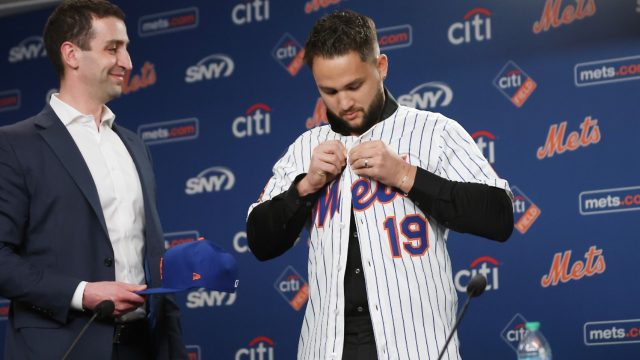
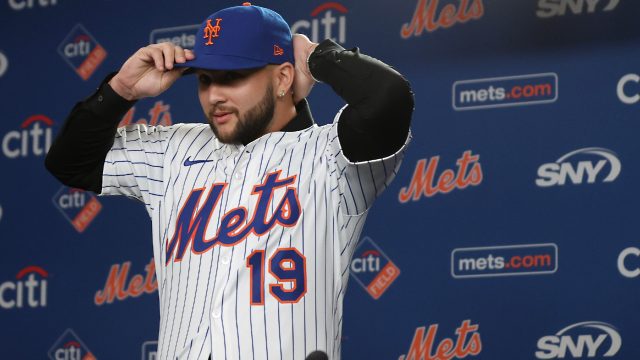
The team gave the largest free-agent contract in franchise history to Dylan Cease and added Kazuma Okamoto, Tyler Rogers and Cody Ponce on eight-figure contracts while homegrown mainstay Bo Bichette went to the New York Mets.
Reunions with currently unsigned 2025 Blue Jays like Chris Bassitt, Max Scherzer and Ty France are technically possible, but in all likelihood, Toronto will enter the 2026 season having allowed all 11 of its free agents to walk.
Prioritizing the talent available outside the organization in free agency isn’t inherently a bad idea. Just because a player performed well for your team in the past, it doesn’t mean he would in the future — and there’s no guarantee any individual’s market will come close to matching a front office’s internal valuations.
There’s also some survivorship bias at play. If a player gets to free agency without signing an extension, that can indicate a lack of interest on the team’s side. After all, if they desperately wanted him, they might’ve found a way to lock him in.
On the player side, there could also be a desire to reach free agency in hopes of maximizing earnings. Once he get there, his most recent team is just one of 30 possible options (although that number tends to be much lower on a practical level). To leave as a free agent, you have to reach free agency, and getting to that point is usually an indication that side or the other is keen on a split.
It makes sense that more often than not, teams and players part ways in free agency. Still, on the surface, it seems somewhat unusual for a World Series team with plenty of money to spend to let all of its free agents go. While it’s not totally unprecedented in recent years, it is unusual.
The last 20 teams to reach the World Series have had a total of 194 free agents, of which 38 have been re-signed — a retention rate of 19.6 per cent. That has resulted in 64 years of contracts worth a total of $738.4 million, plus four minor-league deals.
Because this is an extremely successful cohort of teams, the average outcome for them was a step back the following year, but a look at some of the biggest outliers gives us a clue about whether bringing the gang back together is generally a good idea or not.
What happened to teams like the Blue Jays?
Of the last 20 World Series participants, just four (including the Blue Jays) didn’t retain a single free agent.
The 2016 Cleveland Guardians had just five free agents, and only two of them (Mike Napoli and Rajai Davis) found new MLB homes. That pair combined to produce a 75 wRC+ and -0.4 fWAR elsewhere. Cleveland didn’t seem to miss them as the club’s win total jumped from 94 to 102 in the regular season before falling just short in the ALDS.
The rather infamous 2017 Houston Astros walked a small cohort of six role players out the door (SP Mike Fiers, SP/RP Francisco Liriano, RP Luke Gregerson, RP Tyler Clippard and OF Cameron Maybin) without significant consequences. That team’s core was in its prime, and it reached the ALCS in six consecutive seasons following 2017 with one World Series win (2022).
Although Houston didn’t take a big hit in free agency following 2017, it is a prime example of how a team can remain competitive even after letting big names depart. It has suffered the loss of players like Gerrit Cole, Carlos Correa and George Springer in free agency without falling out of contention.
The other club that let all its free agents go was the 2022 Philadelphia Phillies. Five players that helped propel that team to the World Series (Noah Syndergaard, Jean Segura, Kyle Gibson, Zach Eflin and David Robertson) landed elsewhere on sizeable deals with an average annual value of $10 million or more.
In 2023, Philadelphia upped its regular-season win total by three and came within a single game of a World Series berth. The four pitchers combined for 532.2 innings of 4.40 ERA ball, good for 8.2 fWAR that season, but they weren’t particularly missed as Philadelphia led the majors in pitching fWAR (24.1). Segura fared worse with minus-1.2 fWAR in 85 games for the Miami Marlins in 2023 — his final season in the majors.
The Phillies struggled to break through in the playoffs in 2024 and 2025, but it’d be hard to make the case that a failure to retain their pitchers was their primary issue. The quartet who walked in the 2023 off-season wouldn’t have helped last year’s team, for instance, as they combined for just 101.1 innings with a 6.93 ERA.
What about teams that kept their guys?
On a percentage basis, the recent World Series participant that retained the most free agents was the 2020 Tampa Bay Rays, with five out of eight, but the total investment was just $11.7 million plus one minor-league deal. The two biggest total investments came from the 2019 Washington Nationals ($276.8 million) and the 2024 Los Angeles Dodgers ($102 million).
Washington brought back Stephen Strasburg, Howie Kendrick, Asdrúbal Cabrera, Yan Gomes, Daniel Hudson, Javy Guerra and Ryan Zimmerman. The vast majority of the money spent went to Strasburg ($245 million), who made just eight more starts with the team as injuries brought his career to an early end.
It’s tough to know how much to fault the Nationals for locking up Strasburg after a legendary playoff run, but he had notable health red flags after a 245.1-inning 2019 (including playoffs) that came after topping 150 innings in just one of the previous four seasons.
None of the other retained players distinguished themselves, and Washington’s winning percentage dropped to .433 in the pandemic-shortened 2020 season. It hasn’t exceeded .438 since. On the plus side for Washington, it avoided letting sentimentality result in a massive contract for Anthony Rendon, a player who went on to deliver disastrous production for the Los Angeles Angels.
The 2024 Los Angeles Dodgers are a less extreme case. The team earned another World Series in 2025, but it was hardly because of the free agents they opted to keep after 2024.
Teoscar Hernández produced his worst offensive season as an everyday player by wRC+ in 2025 (102) while Enrique Hernández gave a negative fWAR performance in the regular season (-0.2). The duo combined for a middling .254/.297/.425 line in the playoffs.
Meanwhile, the pitchers Los Angeles brought back — Blake Treinen and Clayton Kershaw — were a mixed bag, delivering a helpful 3.75 ERA in 139.1 regular-season innings before conceding eight earned runs in 7.2 playoff frames.
The situations of World Series participants, from budgets to pending free agents to individual needs, vary enough that it’s tough to generalize here. It does seem fair to say that making a point to re-up with any player who helped you reach the Fall Classic isn’t a good overarching policy. Players usually leave their original teams in free agency, and there isn’t necessarily anything wrong with that.
While there are plenty of ways to make mistakes in free agency — something the Blue Jays may well have done this off-season — a failure to aggressively keep the band together after a World Series appearance isn’t a common one.